
Laparoscopic surgery · Surat
Minimally Invasive Surgery
Advanced keyhole surgery for hernia, gallbladder, appendix, and more with smaller incisions, less pain, and faster recovery.
- Minimally invasive
- Quick recovery
- Less scarring
- 3 small incisions

Overview
What is laparoscopic surgery?
Laparoscopic surgery, also known as keyhole or minimally invasive surgery, is a modern surgical technique where operations are performed through small incisions (typically 5-12mm) using a camera and specialized instruments.
Dr. Krishnani holds a Fellowship in Advanced Laparoscopic Surgery (FALS) from Zen Hospital, Mumbai, bringing expertise in performing complex laparoscopic procedures including hernia repair, gallbladder removal, and appendectomy.
- FALS Certified
- 3-4 Small Incisions
- Faster Recovery
Keyhole vs open
3 small cuts vs one open cut
Switch between the two to see the difference in cuts, pain and time off. Figures are typical for hernia repair. Which approach suits you is decided after an examination.
3 cuts of 5–10 mm, one hidden in the navel
| Aspect | Laparoscopic | Open |
|---|---|---|
| Incision Size | 3 small (5-10mm) | Large (5-8cm) |
| Pain Level | Minimal | Moderate to High |
| Recovery Time | 1-2 weeks | 4-6 weeks |
| Scarring | Barely visible | Visible scar |
| Return to Work | 1 week | 3-4 weeks |

Reviewed by Dr. Nikhil Krishnani MBBS, MS, FALS · laser proctology (IMMAST)
This is a guide to help you talk to a doctor, not a diagnosis. Only an examination can confirm what you have.
Ask Dr. Nikhil on WhatsAppReal photos
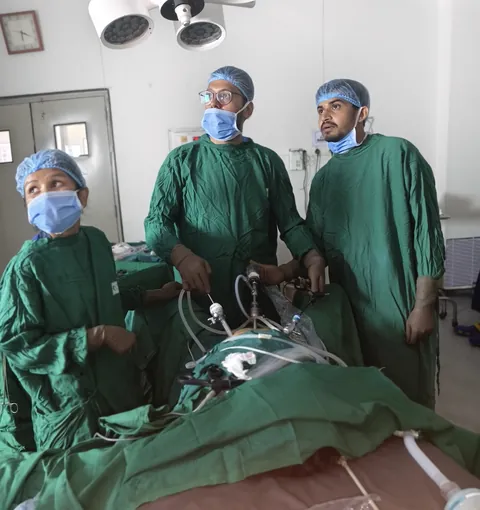
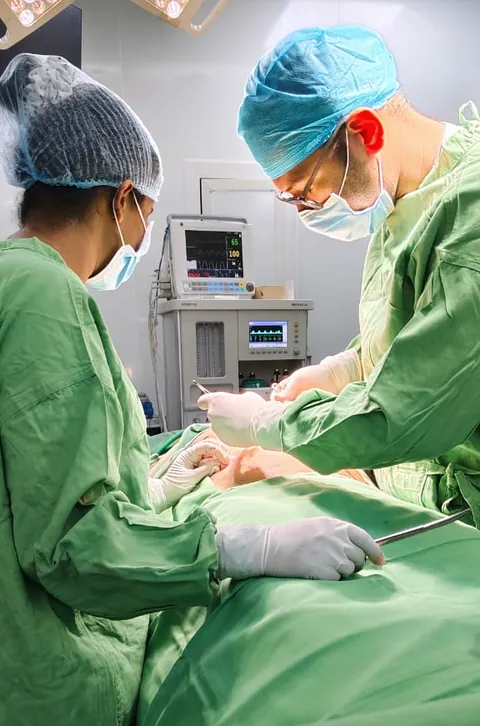
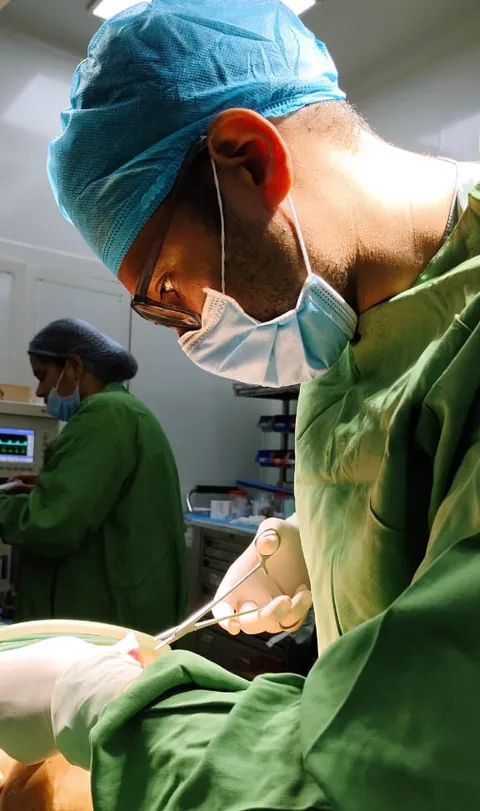
Inside the operating theatre
Real photos from his operations. The camera and fine instruments go in through a few small openings.
Why laparoscopic?
Advantages over open surgery
-
Smaller Incisions
Only 3-4 small cuts (5-12mm) instead of large open incisions
-
Less Pain
Reduced tissue trauma means significantly less post-operative pain
-
Faster Recovery
Return to work and normal activities within days, not weeks
-
Minimal Scarring
Tiny incisions heal with barely visible marks
-
Shorter Hospital Stay
Many procedures done as day-care or with 1-night stay
-
Lower Infection Risk
Reduced exposure means fewer chances of surgical site infections
Procedures
What we perform
-
Hernia Repair Worth reading
Minimally invasive hernia repair for inguinal, umbilical, and incisional hernias with mesh reinforcement.
-
Gallbladder Surgery Worth reading
Laparoscopic cholecystectomy for gallstones and gallbladder disease with minimal scarring.
-
Appendectomy Worth reading
Emergency and elective laparoscopic appendix removal with rapid recovery.
- Ask in OPD
Diagnostic Laparoscopy Worth reading
Minimally invasive exploration for accurate diagnosis of abdominal conditions.
- Ask in OPD
Abdominal Surgery Worth reading
Various abdominal procedures performed laparoscopically for better outcomes.
-
Hiatus Hernia Worth reading
Keyhole repair of a hiatus hernia (fundoplication) for reflux that medicines do not control.
-
Rectal Prolapse Worth reading
Laparoscopic ventral rectopexy to lift and fix the rectum back in place.
FAQs
Frequently asked questions
Answers by Dr. Nikhil Krishnani MBBS, MS, FALS · Surat
Why choose laparoscopic over open surgery for hernia?
Do all gallstones need surgery?
Is appendicitis an emergency?
What is a hernia?
How long is hernia recovery?
Is mesh necessary for hernia repair?
Can hernias be dangerous if left untreated?
Book a consultation
Need hernia, gallbladder, or appendix surgery?
Consult Dr. Krishnani for expert laparoscopic surgery with minimal scarring and faster recovery.
You'll be seen by Dr. Nikhil Krishnani Personally, at every OPD · MBBS, MS, FALS