
Hiatus hernia & reflux · Surat
Laparoscopic Hiatus Hernia Repair
When acid reflux and heartburn keep coming back despite medicines, a hiatus hernia is often part of the reason. Keyhole surgery puts the stomach back in place and rebuilds the valve that keeps acid down.
- Keyhole surgery
- Repairs the valve
- Short hospital stay
- Tests before deciding
- Small cuts
- 4–5
- Hospital stay
- 1–2 days
The condition
What is a hiatus hernia?
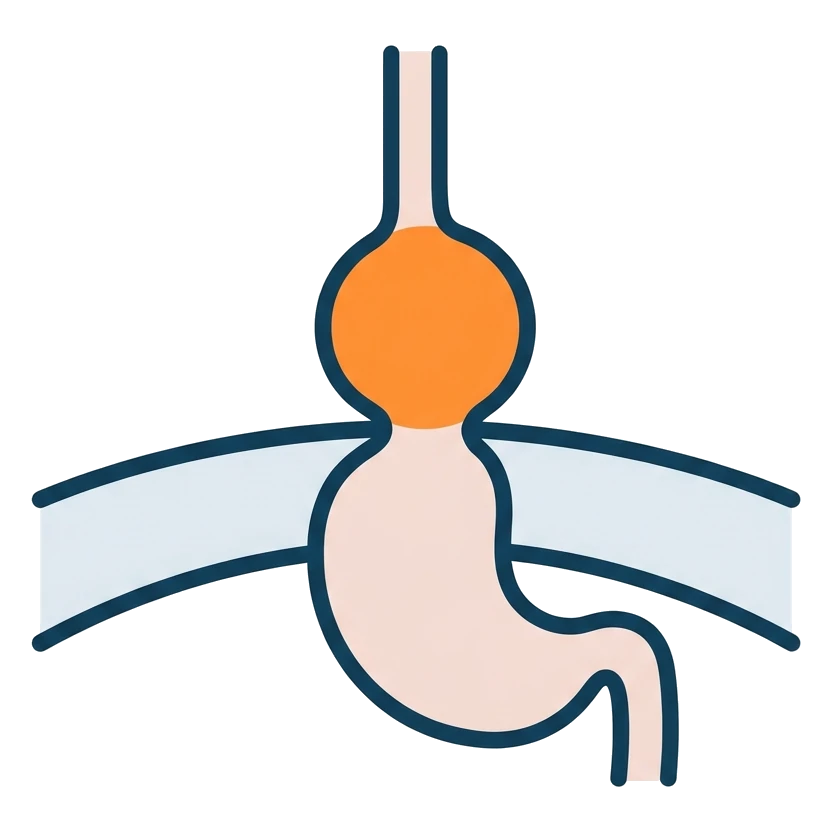
The food pipe (oesophagus) passes into the belly through a small opening in the diaphragm, the dome-shaped muscle that separates the chest from the abdomen. That opening is called the hiatus. When it widens, the top of the stomach can slide up through it into the chest. This is a hiatus hernia.
Many small hiatus hernias cause no trouble. But when the stomach sits above the diaphragm, the natural valve between the food pipe and the stomach works less well, so acid and food can flow back up. That is reflux, felt as heartburn, a sour taste or food coming back into the mouth.
Treatment ranges from lifestyle changes and acid-reducing medicines to keyhole surgery. Which one suits you is decided after an examination and tests, not from symptoms alone. Dr. Nikhil trained in advanced laparoscopy under Dr. Roy Patankar at Zen Hospital, Mumbai.
Common symptoms
- 01 Burning pain behind the breastbone (heartburn), often after meals
- 02 Sour or bitter fluid, or food, coming back into the throat or mouth
- 03 Symptoms worse when lying down, bending or at night
- 04 Belching, bloating or a feeling of fullness soon after eating
- 05 Long-standing cough, hoarse voice or throat clearing
- 06 Chest discomfort after large meals
Food sticking when you swallow, losing weight without trying, vomiting blood, black stools or anaemia need prompt tests, usually an endoscopy, before anything else. New chest pain should always be checked for heart causes first.
Reflux questions
What the doctor asks about reflux
Five quick questions about your heartburn, and why each one matters. Your answers are a useful start for the visit.

Reviewed by Dr. Nikhil Krishnani MBBS, MS, FALS · laser proctology (IMMAST)
This is a guide to help you talk to a doctor, not a diagnosis. Only an examination can confirm what you have.
Ask Dr. Nikhil on WhatsAppTreatment
How reflux and hiatus hernia are treated
These are the treatments Dr. Nikhil offers. Surgery is planned only after tests confirm that reflux is the cause, and he will explain which options suit you at the visit.
-
Lifestyle changes
Smaller meals, no food for 2–3 hours before bed, raising the head end of the bed, losing extra weight, and cutting down on what sets it off for you (often fried or spicy food, tea, coffee, alcohol and smoking).
-
Acid-reducing medicines
Tablets such as proton pump inhibitors (PPIs) reduce stomach acid and let an inflamed food pipe heal. They do not fix the hernia or the weak valve.
-
Tests before surgery
An endoscopy to look at the food pipe and stomach, and when needed a barium swallow, oesophageal manometry (pressure test) or 24-hour pH study. These confirm reflux and help choose the right operation.
-
Laparoscopic repair with fundoplication
Through small cuts the stomach is brought back into the belly, the widened opening is narrowed with stitches (sometimes reinforced with mesh), and the top of the stomach is wrapped around the lower food pipe to form a new valve. The wrap may be full (Nissen) or partial, chosen from the tests.
Medicines vs surgery
| Aspect | Keyhole repair | Long-term medicines |
|---|---|---|
| What it does | Fixes the hernia and rebuilds the valve | Reduces acid; the hernia stays |
| Regurgitation of food | Usually helps | Often continues |
| Daily tablets | Often not needed afterwards | Usually needed long term |
| Downtime | A few days in hospital and at home | None |
| Side effects to know | Early swallowing tightness, bloating | Depends on the medicine |
What to expect
Before, during and after
- 01
Before
- A detailed history of your symptoms and the medicines tried
- Endoscopy, and other reflux tests if needed
- Blood tests and a fitness check for general anaesthesia
- A clear cost estimate and an honest talk about what surgery can and cannot do
- 02
During
- General anaesthesia
- 4–5 small cuts and a camera
- Stomach brought down, opening narrowed, wrap created; usually 1.5–3 hours
- 03
After
- Walking the same or next day
- Liquids first, then a soft diet
- Usually home in 1–2 days
- Review about 1 week after surgery
Recovery
Your recovery
Typical times. Your own plan depends on the procedure chosen and how you heal; Dr. Nikhil gives specific guidelines to each patient.
- Days 1–2 Sips and liquids, walking around. Mild shoulder-tip or chest discomfort from the gas used in surgery is common.
- Weeks 1–2 Soft, moist food in small portions, eaten slowly. Some tightness while swallowing is expected as the swelling settles.
- Weeks 2–3 Most people are back to desk work and normal daily activities.
- Weeks 4–6 Gradually back to a normal diet. Heavy lifting and strenuous exercise only after this, as advised.
FAQs
Frequently asked questions
Answers by Dr. Nikhil Krishnani MBBS, MS, FALS · Surat
Does every hiatus hernia need surgery?
What tests will I need before surgery?
Will I be able to eat normally after the operation?
Will I still need my acid tablets?
Is my chest pain from reflux?
Where does Dr. Nikhil see patients?
Other treatments
Book a consultation
Living with reflux?
If heartburn keeps coming back, a proper evaluation can show whether a hiatus hernia is part of the cause, and Dr. Nikhil will explain your options.
You'll be seen by Dr. Nikhil Krishnani Personally, at every OPD · MBBS, MS, FALS