
Gallbladder surgery · Surat
Laparoscopic Gallbladder Removal
Keyhole surgery for painful gallstones. The gallbladder and its stones come out through a few small cuts, and most people are back to normal life within a couple of weeks.
- 3–4 small cuts
- Less pain
- Short hospital stay
- Minimal scarring
- Normal diet after recovery
- Small cuts
- 3–4
- Back to routine
- 1–2 wks
The condition
Understanding gallstones
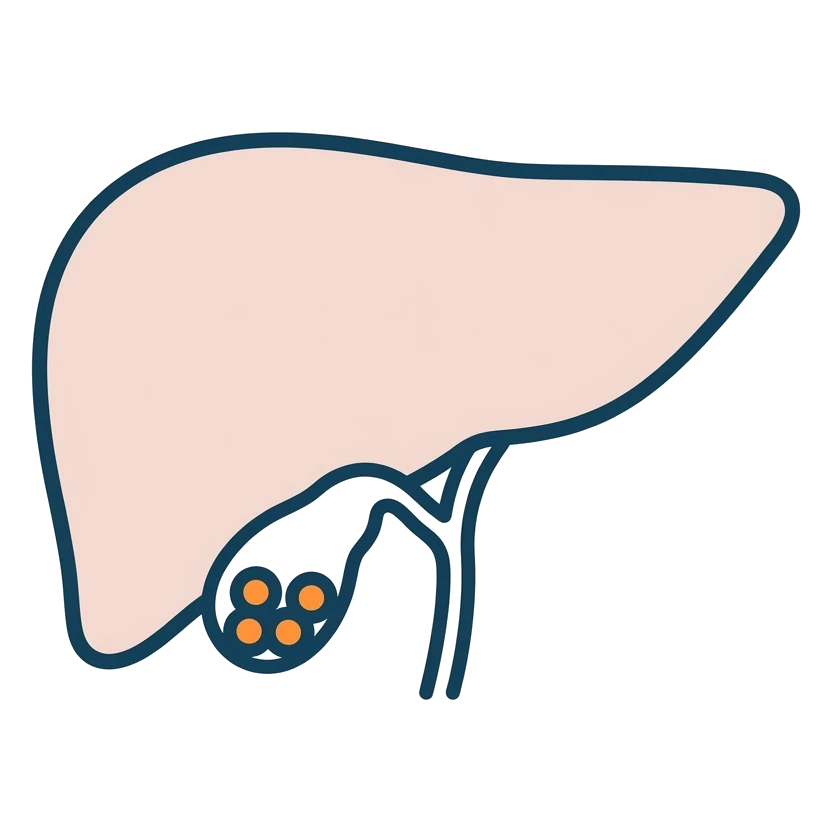
The gallbladder is a small pouch tucked under the liver. It stores bile, a digestive juice that helps break down fat. Gallstones are hard deposits that form inside it. Many people have stones and never feel them; trouble starts when a stone blocks the gallbladder outlet.
That usually happens after a fatty or heavy meal, and causes pain in the upper right belly that can spread to the back or the right shoulder blade. Once stones have started causing attacks, they tend to keep coming back, and the standard treatment is to remove the gallbladder by keyhole surgery (laparoscopic cholecystectomy).
Life without a gallbladder is normal. The liver keeps making bile, which then flows straight into the intestine, and most people go back to their usual diet after recovery.
Common symptoms
- 01 Pain in the upper right or upper middle belly, often after fatty meals
- 02 Pain spreading to the back or the right shoulder blade
- 03 Nausea or vomiting with the pain
- 04 Bloating, heaviness or indigestion after meals
- 05 Attacks that settle, then return weeks or months later
Yellow eyes or skin, dark urine, fever with chills, or severe pain that will not settle need to be seen the same day. They can mean a blocked bile duct, an infection or pancreatitis.
Gallstone signs
What gallstone pain feels like
Tick where and when the pain comes to see what each sign means, and what happens at the visit.
Please be seen today
Yellow eyes or skin, or fever with the pain, can mean a stone is blocking the bile duct or the gallbladder is infected. Call now, or go to the nearest hospital.
Call +91 70168 88309Tick what matches
You will see what each sign means, and what the doctor looks at.
What these signs mean
- The gallbladder sits here, under the liver. The liver, stomach and duodenum are close by too.
- The gallbladder squeezes after fatty food, so pain at that time is a clue worth mentioning.
- Pain from the gallbladder can be felt in the back or shoulder, because they share nerves.
- Feeling sick often comes with gallbladder pain, and also with acidity and gastritis.
- How often the attacks come, and how long they last, helps the doctor understand the cause.
- Stones found on a scan still need a proper review. Bring the report and Dr. Nikhil will go through it with you.
Upper belly pain has several possible causes, and gallstones are only one of them. An examination and an ultrasound tell them apart. Dr. Nikhil will explain your options at the visit.
What happens at the visit
- A talk and an examination Dr. Nikhil asks about the pain and gently examines your belly.
- An ultrasound A simple scan shows whether there are stones and how the gallbladder looks.
- Your options He explains what the findings mean and the choices for you.

Reviewed by Dr. Nikhil Krishnani MBBS, MS, FALS · laser proctology (IMMAST)
This is a guide to help you talk to a doctor, not a diagnosis. Only an examination can confirm what you have.
Ask Dr. Nikhil on WhatsAppTreatment
How gallstones are treated
Dr. Nikhil decides the plan with you after an examination and an ultrasound. Medicines do not reliably dissolve gallstones, and removing only the stones lets new ones form.
-
Review and follow-up
Your scan and symptoms are reviewed, and you are told which signs to look out for and when to come back.
-
Laparoscopic cholecystectomy
The gallbladder and its stones are removed through 3–4 small cuts using a camera.
-
Treating complications first
An inflamed gallbladder is first treated with fluids and antibiotics in hospital. A stone stuck in the bile duct may need an endoscopic procedure (ERCP) to clear it. The gallbladder is then removed at a time that is safe.
Keyhole vs open surgery
| Aspect | Laparoscopic | Open surgery |
|---|---|---|
| Cuts | 3–4 small cuts (5–10 mm) | One longer cut under the right ribs |
| Pain | Less | More |
| Hospital stay | Usually the same or next day | A few days |
| Back to routine | About 1–2 weeks | Several weeks |
What to expect
Before, during and after
- 01
Before
- An ultrasound of the abdomen to confirm the stones
- Blood tests, including liver function, and a fitness check for general anaesthesia
- A clear cost estimate before admission
- No food for about 6 hours before surgery
- 02
During
- General anaesthesia
- 3–4 small cuts and a camera
- Gallbladder and stones removed, usually in about an hour
- 03
After
- Usually home the same or next day
- Walking and light meals the same evening
- Follow-up in about 1 week
Recovery
Your recovery
Typical times. Your own plan depends on the procedure chosen and how you heal; Dr. Nikhil gives specific guidelines to each patient.
- Days 1–3 Light activity at home and simple, low-fat meals.
- Week 1 Most patients are back to desk work.
- 1–2 weeks Normal daily activities.
- 4–6 weeks Heavy lifting and gym only after this.
FAQs
Frequently asked questions
Answers by Dr. Nikhil Krishnani MBBS, MS, FALS · Surat
What are gallstones and why do they form?
Do all gallstones need surgery?
Can gallstones be dissolved with medicines?
Can I live normally without a gallbladder?
How long is recovery after gallbladder removal?
Will my keyhole surgery ever become open surgery?
Other treatments
Book a consultation
Troubled by gallstones?
Have your symptoms and scan reviewed, and hear your options in plain words. Book your consultation today.
You'll be seen by Dr. Nikhil Krishnani Personally, at every OPD · MBBS, MS, FALS