
Fissure treatment · Surat
Anal Fissure Treatment
Expert treatment for painful anal fissures. End the cycle of pain and fear with advanced, minimally invasive procedures.
- Minimal pain
- Quick procedure
- Fast healing
- High success rate
- Success rate
- 95%
- Procedure time
- 15 min
The condition
Understanding anal fissures
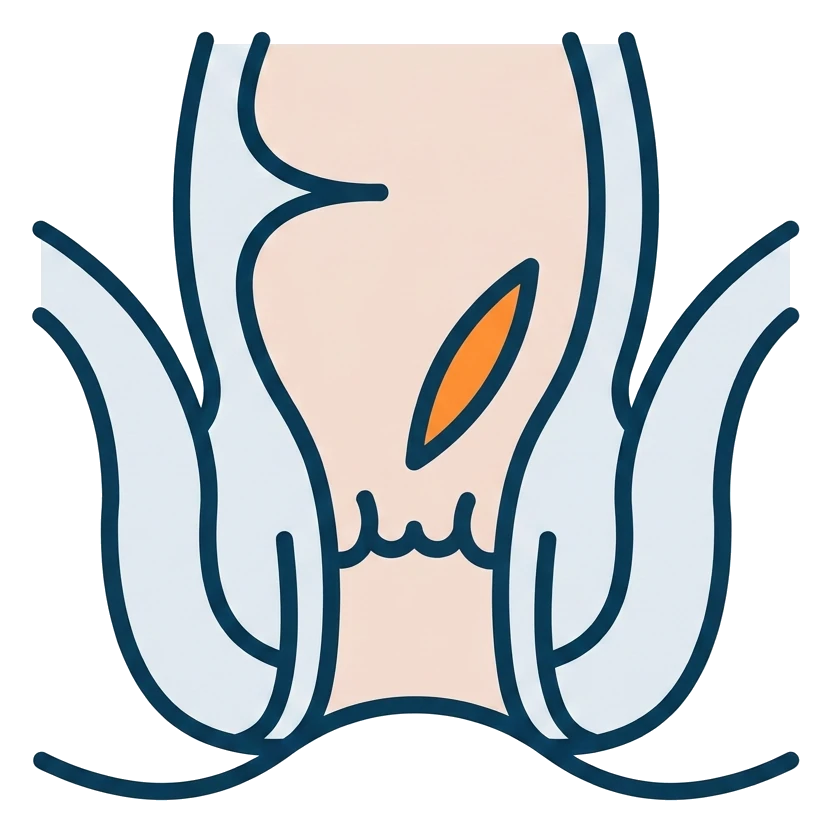
An anal fissure is a small tear in the thin, moist tissue (mucosa) lining the anus. It typically causes severe pain during bowel movements and can create a cycle of fear and avoidance that worsens constipation.
The pain occurs because the anal sphincter muscle goes into spasm, reducing blood flow and preventing natural healing. Breaking this cycle is what treatment aims to do.
Common symptoms
- 01 Sharp, severe pain during bowel movements
- 02 Pain lasting hours after passing stool
- 03 Bright red blood on stool or toilet paper
- 04 Visible crack or tear in anal skin
A fissure that is not in the usual position, keeps coming back despite treatment, or comes with diarrhoea or weight loss should be examined further.
Fissure questions
What Dr. Nikhil asks about a fissure
Three questions he asks at the first visit, and why each one matters. Your answers help the conversation; the examination decides the plan.
Why these questions
Answer a question to begin
Why Dr. Nikhil asks it will show here.
Why Dr. Nikhil asks
- How long has it lasted? Doctors use the words acute and chronic for how long a fissure has been there. Its age is only one part of the picture. The tear itself has to be seen.
- Can you feel a small skin tag or lump right at the edge? A small skin tag can form beside a fissure. A lump there can also be a pile or something else, so it is worth having it looked at.
- Have you used any medicines or creams for it so far? Tell Dr. Nikhil about anything you have used, including home remedies. Feeling better does not always mean the tear has healed.
Only an examination can show what is going on. Dr. Nikhil will look gently, without probing, and explain your options at the visit.

Reviewed by Dr. Nikhil Krishnani MBBS, MS, FALS · laser proctology (IMMAST)
This is a guide to help you talk to a doctor, not a diagnosis. Only an examination can confirm what you have.
Ask Dr. Nikhil on WhatsAppTreatment
How Dr. Nikhil treats fissures
Dr. Nikhil offers medicines as well as procedures. He suggests a plan only after examining you.
-
Conservative Management
Sitz baths, dietary changes and medicated creams that relax the muscle spasm.
-
Botox Injection
An injection that relaxes the sphincter muscle for a while, giving the tear time to heal.
-
Lateral Internal Sphincterotomy
A small, controlled cut in the muscle that lowers the pressure and lets the tear heal.
-
Laser Fissurectomy
Precise laser removal of fissure tissue with minimal bleeding and faster healing.
What to expect
Before, during and after
- 01
Before
- A gentle examination, often just by looking, since a fissure is too painful to probe
- A plan agreed with you, which may be medicines, a procedure or both
- Routine tests and a cost estimate if a procedure is advised
- 02
During
- Done under anaesthesia, usually as day care
- The procedure itself is short, about 15 minutes
- The aim is to relax the spasm so the tear can heal
- 03
After
- Most people feel the spasm pain ease within days
- Sitz baths, stool softener and a high-fibre diet
- Follow-up in 1–2 weeks
Recovery
Your recovery
Typical times. Your own plan depends on the procedure chosen and how you heal; Dr. Nikhil gives specific guidelines to each patient.
- Day 1 Home the same day in most cases.
- First days Significant pain relief as the spasm settles.
- 1–2 weeks Follow-up visit and back to routine work.
- 4–6 weeks Complete healing of the fissure.
FAQs
Frequently asked questions
Answers by Dr. Nikhil Krishnani MBBS, MS, FALS · Surat
Can fissures heal without surgery?
What is an anal fissure?
What causes fissures?
How long does fissure recovery take?
Other treatments
Book a consultation
End the pain today
Get expert fissure treatment and break the cycle of pain. Book your consultation.
You'll be seen by Dr. Nikhil Krishnani Personally, at every OPD · MBBS, MS, FALS